Evaluation et suivi des Déchets Marins à la Réunion. Il vise à évaluer la présence des déchets marins en mer tout autour de la Réunion et de proposer un suivi pérenne qui respecte les préconisations de l’UE. Projet financé par la DEAL et la Région Réunion.
LES DECHETS MARINS
Tout déchet trouvé en mer, en surface ou dans la colonne d’eau ainsi que tout déchet présent sur les plages et le littoral susceptible d’être ramené en mer par la houle est un déchet marin. Plusieurs catégories de déchets marins existent, elles sont définies selon la taille du déchet :
La Directive-Cadre Stratégie pour le Milieu Marin (DCSMM) : stratégie d’atteinte du Bon État Écologique (descripteur 10 concerne les déchets marins).
Le Plan d’action du gouvernement « zéro déchet plastique en mer » (2020-2025).
La Stratégie Nationale pour la Mer et le Littoral (SNML) et le Document stratégique de Bassin Maritime Sud océan Indien (DSBM) prennent en compte la thématique des déchets marins.
Le projet DEMARRE vise à mettre en œuvre et à adapter les protocoles européens au contexte réunionnais.
Les objectifs
Caractériser les zones d’accumulation littorale autour de l’île (activité 1).
Suivre les déchets marins (macro et micro) sur le littoral réunionnais en suivant les protocoles DCSMM (activités 2 et 3).
Evaluer la présence de macro-déchets sur certains sites de la pente externe du récif de la côte ouest (activité 2).
Bancariser les données dans la base de données spécifique DALI (activité 4).
Assurer le lien avec les pays de la zone Océan Indien et en particulier avec les initiatives pilotées par la COI (projet ExPLOI) et le WIOMSA (activité 5).
Proposer une stratégie de suivi pérenne
La stratégie
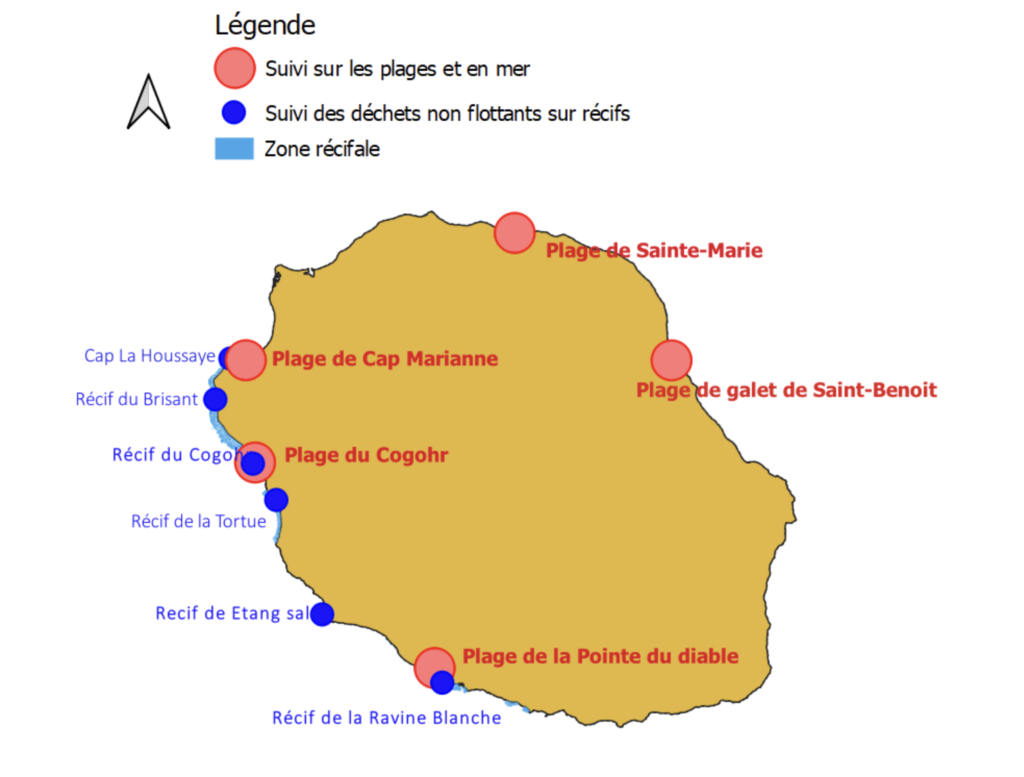
5 sites (plage et masse d’eau côtière adjacente) tout autour de l’ile.
-> 2 années de suivis trimestriels (2021 à 2023)
6 stations récifales de suivi (pente externe)
-> 2 campagnes (saisons sèche et humide)
Protocoles
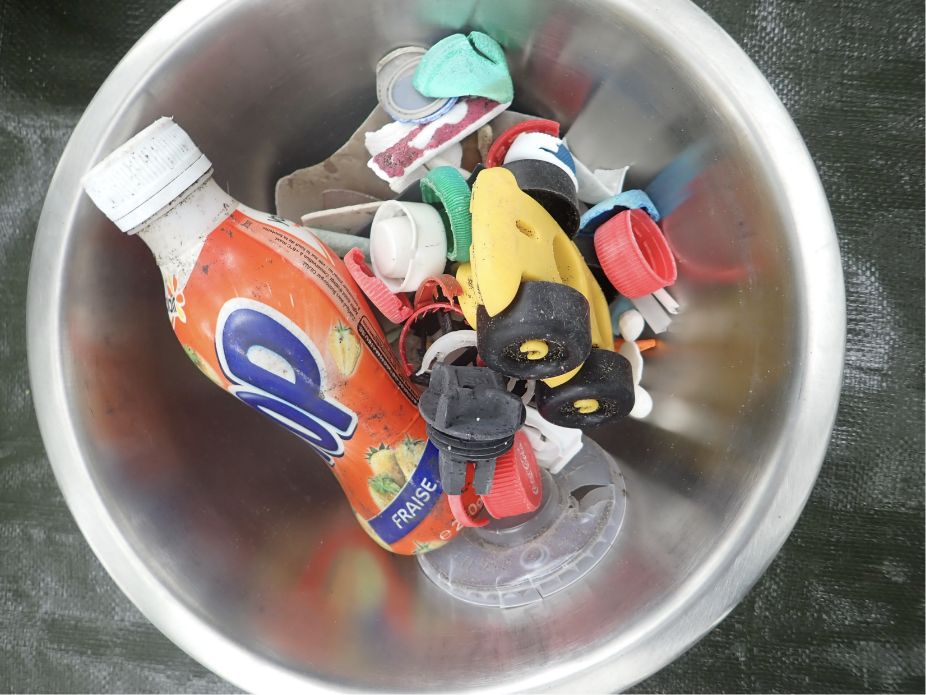
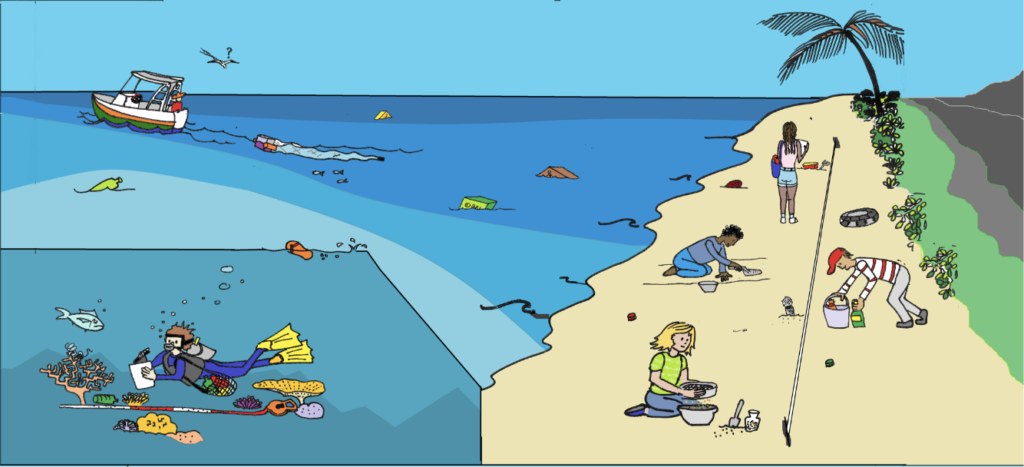
Macro-déchets déposés sur les plages : collectés le long de trois transects de 50m, puis comptés et pesés par catégorie.
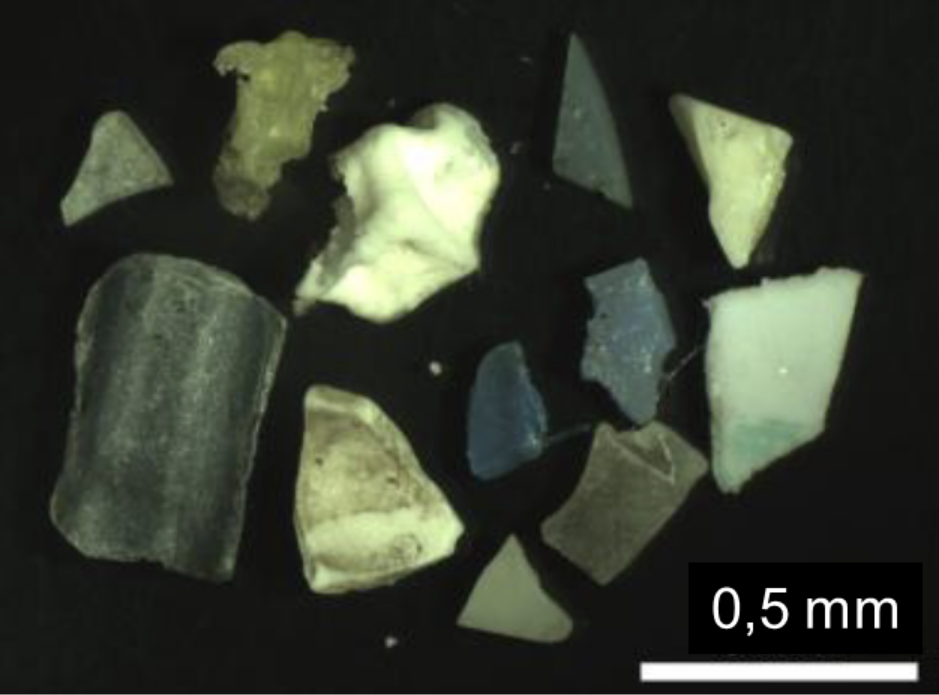
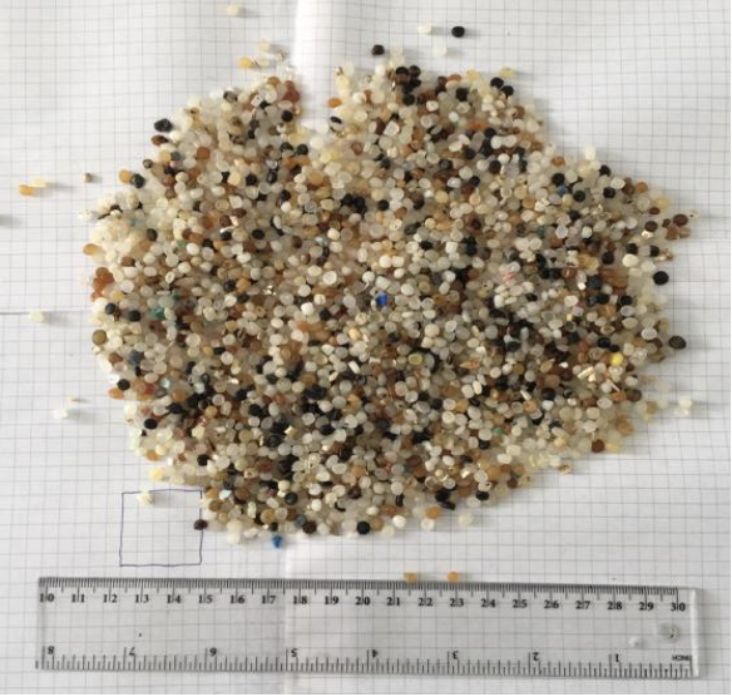
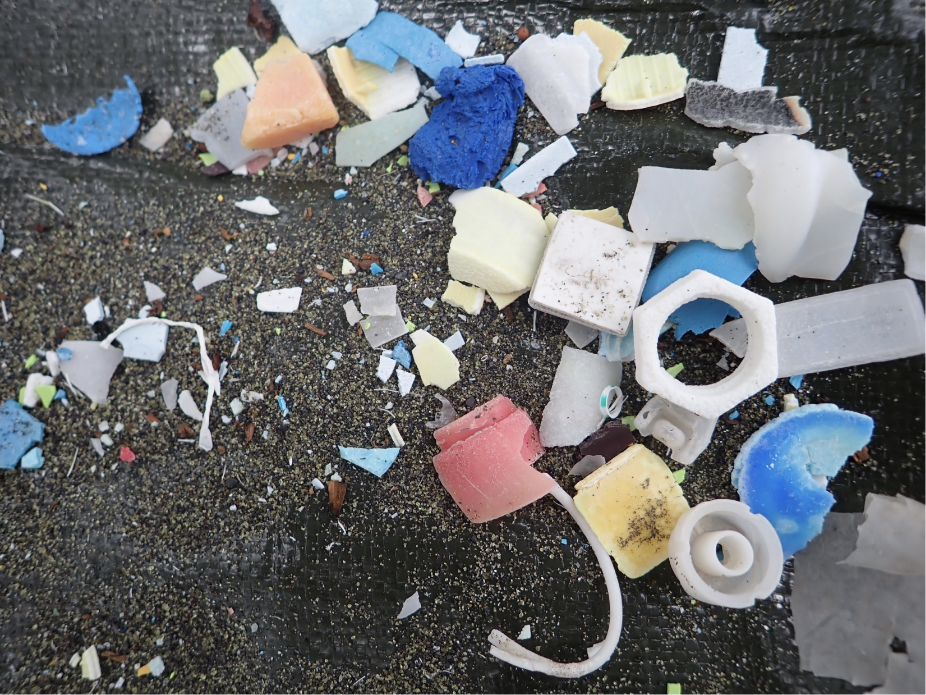
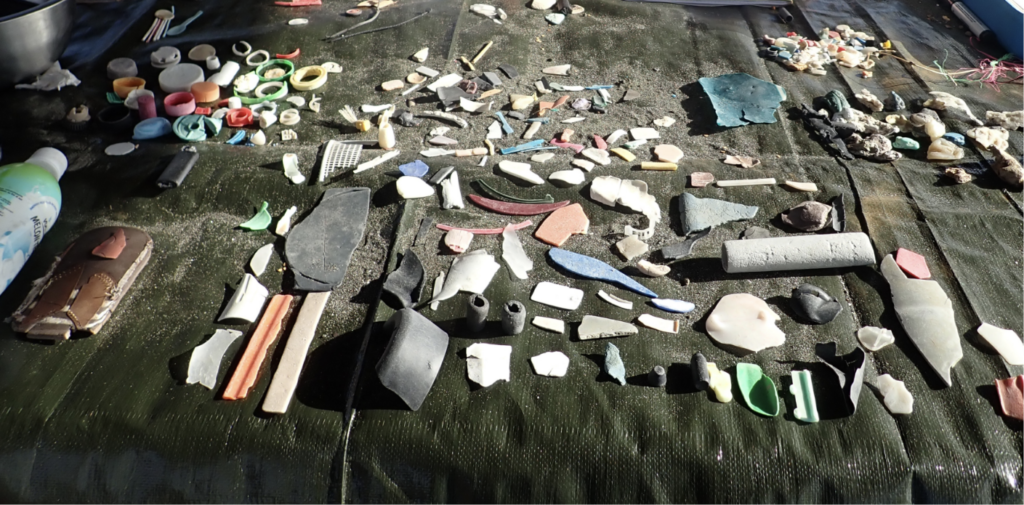
Méso-déchets et grands microplastiques déposés sur la plage : collectés dans plusieurs bandes de 50cm de large de la mer jusqu’en haut de plage (à l’aide d’une spatule en métal), tamisés, comptés et pesés par catégories.
Microplastiques dans le sédiment : collectés dans 5 quadra de 50x50cm sur 5cm de profondeur. Les sédiments sont tamisés, les grands microplastiques séparés visuellement, les petits microplastiques séparés par flottation, puis comptés et pesés par catégories.
Macro-déchets flottants en mer : recensés le long de 3 transects de 1 mille nautique par un observateur sur un navire.
Microplastiques en mer : récoltés à l’aide d’un filet Manta trainé derrière un navire à faible allure puis comptés et pesés par catégorie.
Macro-déchets non flottants : recensés et collectés le long de 2 transects de 100x5m en plongée sous marine. L’impact sur le corail est aussi étudié.