Type d'activité :
- Pêche
Chef de projet :
Evgeny ROMANOV
Pourquoi un programme de collecte de données de pêche ?
Dans le cadre de la Politique Commune des Pêches de 2013, le Data collection Framework (DCF), constitue un ensemble de méthodes dédiées à la collecte, à la gestion et à l’analyse des données relatives à l’activité de pêche. Il vise à garantir que les activités de pêche des États membres soient durables à long terme sur le plan environnemental, social et économique.
La PCP se base sur le principe que l’intensité d’exploitation des ressources halieutiques doit permettre le rétablissement et le maintien des populations des espèces exploitées au-dessus du RMD.
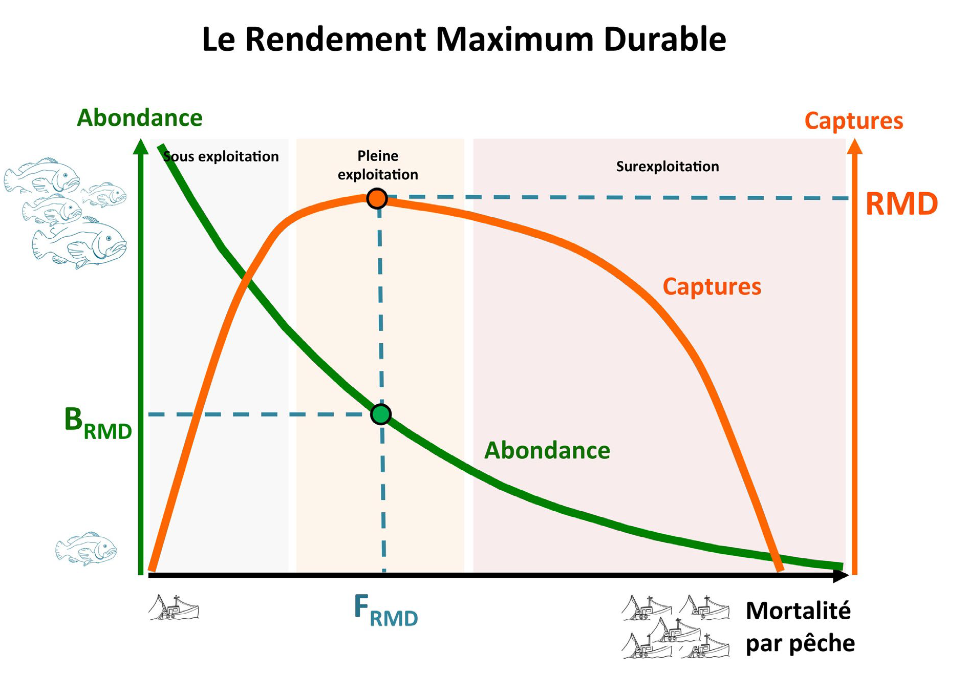
Le RMD (Rendement Maximum Durable) est la biomasse prélevée maximum que l’on peut pêcher en moyenne sur le long terme d’un stock halieutique, dans les conditions environnementales existantes, sans affecter le processus de reproduction, d’après une définition de la FAO (Food and Agriculture Organization of the United Nations).
Les mesures de gestion sont basées sur les meilleurs avis scientifiques disponibles, réalisés grâce à des séries de données de bonne qualité. Le DCF propose ainsi la mise en place un plan pluriannuel de collecte de données de pêche que chaque État membre décline aux niveaux national et régional.
Qui gère la collecte de données ?
En France, c’est la DGAMPA (Direction Générale des Affaires Maritimes, de la Pêche et de l’Aquaculture) qui est garante de la mise en œuvre nationale. L’IRD met en œuvre ce programme pour les pêcheries tropicales thonières dans l’Océan indien (senneurs et palangriers).
A La Réunion, c’est le CITEB qui est en charge du programme de collecte de données de pêche de la flottille palangrière réunionnaise. L’objectif fixé est de couvrir une observation de 5% de l’effort de pêche de cette flottille afin de respecter les obligations de l’Etat vis-à-vis de l’organisation régionale de gestion des pêches (CTOI – Commission thonière de l’océan Indien) et de l’Union Européenne.
L’ensemble des données sont vérifiées, anonymisées, traitées et valorisées auprès de l’IRD, qui agrémente ainsi la base de données nationale, et celle de la CTOI. Ces données serviront soit à alimenter les modèles d’évaluation de stock ou à affiner les mesures de gestion des ressources existantes.
Qu’est ce qu’une palangre ?
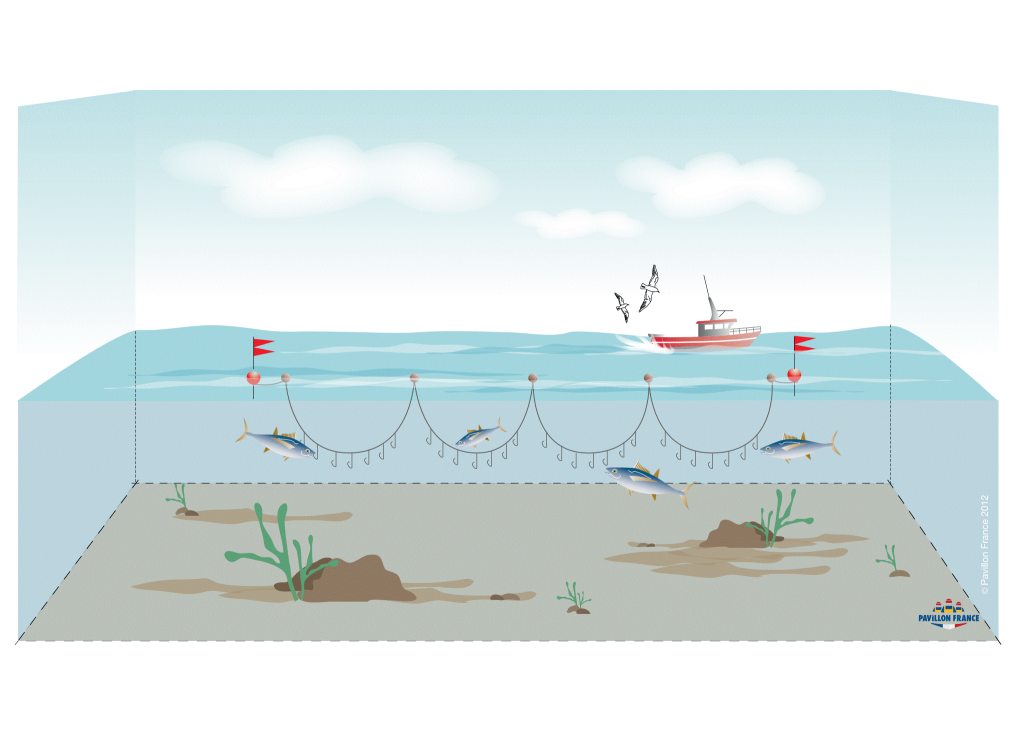
La longline, ou palangre dérivante à grands pélagiques, est une palangre qui est maintenue près de la surface ou à une certaine profondeur au moyen de flotteurs régulièrement espacés. Les nombreux hameçons situés au bout de chaque orin sont appâtés avec du calmar. C’est un engin de pêche utilisé par 37% des navires actifs réunionnais. L’espadon (Xiphias gladius), le thon albacore (Thunnus albacares) et le thon germon (Thunnus alalunga) sont les 3 espèces principalement pêchées grâce à cette technique.
Les captures à la palangre représentent 81% du tonnage moyen à La Réunion, soit 2569 T en 2023 (Source : SIH Ifremer, juin 2024).
Comment est collectée la donnée à bord des palangriers ?
Par observation embarquée
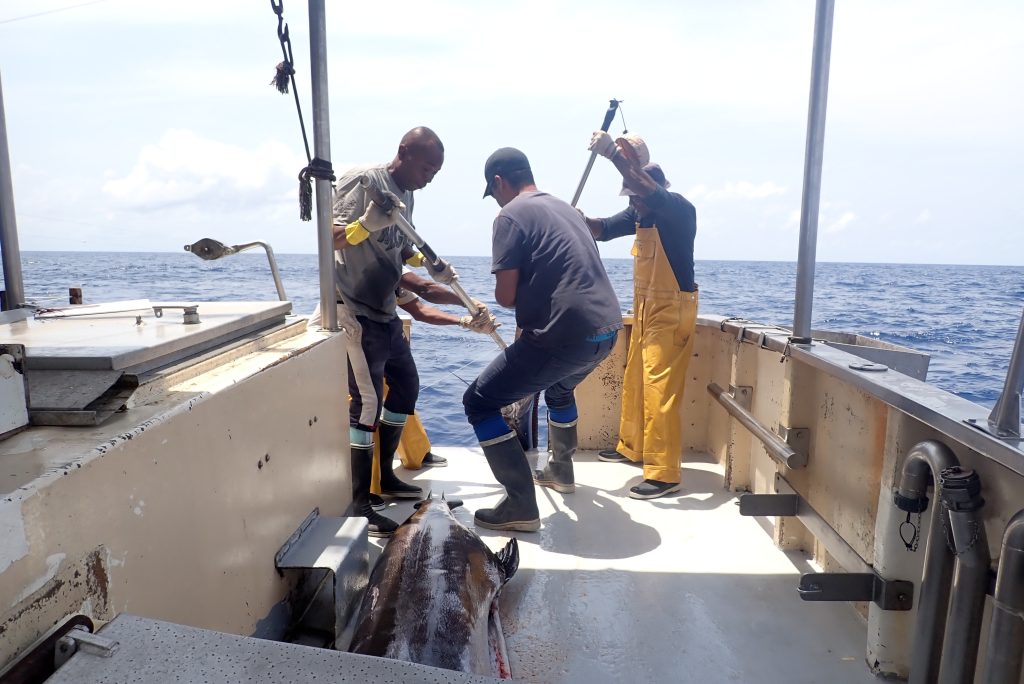
Un observateur/observatrice scientifique qualifié suit de manière exhaustive la marée : déroulé de l’opération de pêche, structure détaillée de la palangre et de la stratégie de pêche, identifie et mesure de toutes les espèces remontées à bord et note l’ensemble des captures accessoires rejetées.
Il fournit ensuite un rapport de marée avec pré-analyse des données collectées.
Les observateurs peuvent également participer à des programmes de recherche (marquage d’espèces protégées ou emblématiques comme les requins (projet ASUR), prélèvement d’échantillons, tests de dispositifs anti-déprédation (projet PARADEP…)
⚓︎
⚓︎
Ces observations sont réalisées sur les navires de la flottille palangrière réunionnaise, dans toutes les zones d’activité de la pêcherie, afin de rendre compte de façon précise de l’activité de pêche générale sur une année (120 filages observés par an).
Par auto-échantillonnage des patrons de pêche
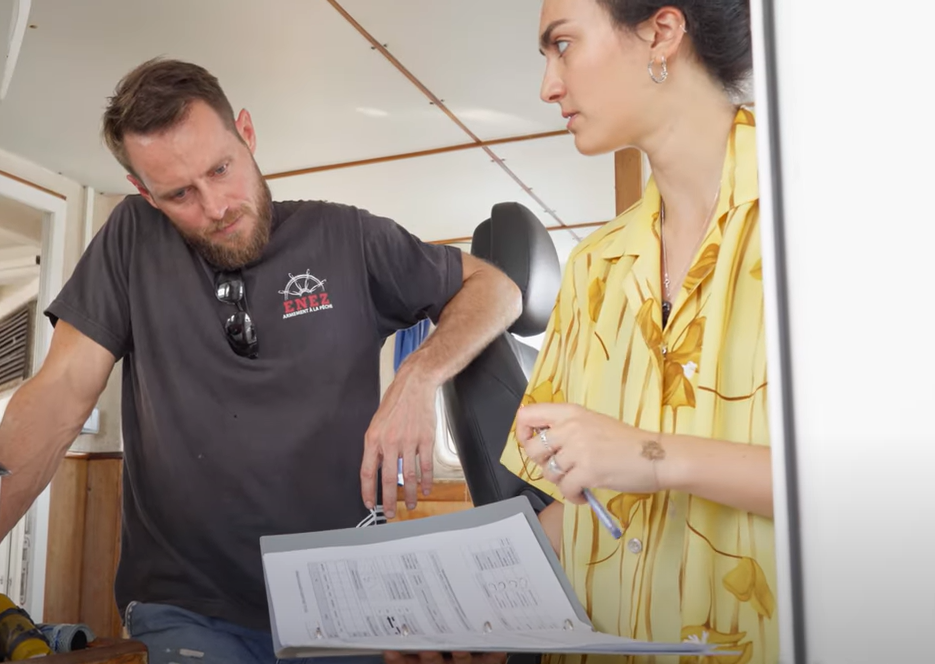
Les capitaines sont formés au remplissage précis des formulaires sur l’opération de pêche. Les informations demandées portent sur la stratégie de pêche, les conditions de mer, sur les captures (commerciales, accessoires, accidentelles, rejetées…) ainsi que sur toute interaction avec la mégafaune (observation, capture, déprédation).
⚓︎
⚓︎
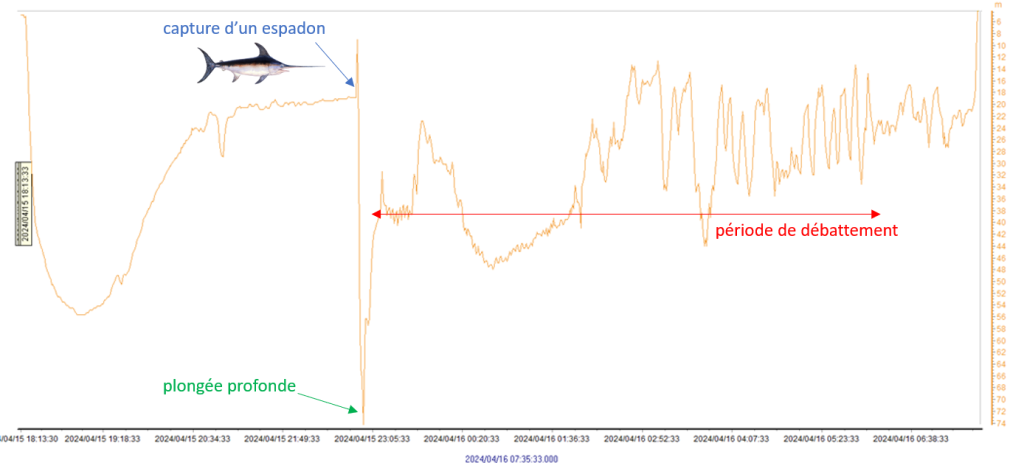
Des capteurs de température et de pression (TDR) sont également déployés sur la ligne, ce qui permet aux capitaines de connaître leur profondeur de pêche et aux scientifiques d’étudier le comportement de la ligne en profondeur ainsi que celui des espèces capturées. Ci-dessous, le comportement d’une ligne équipée d’un capteur permet de visualiser une capture d’espadon vers 15m de profondeur.
⚓︎
⚓︎
Quelle importance de ces programmes de collecte de données pour les pêcheurs ?
- – Participation à l’effort commun de la gestion durable des ressources halieutiques
- – Meilleure compréhension des interactions entre les activités de pêche et les mammifères marins
- – Amélioration de la précision des évaluations de stock et de la connaissance des flottilles
- – Acquisition d’informations relatives au changement climatique et à l’évolution de la composition des captures grâce à des séries de données pluriannuelles
- – Accès à des subventions et des programmes de soutien des pêcheries
- – Acquisition de connaissances sur sa technique de pêche grâce à l’instrumentation de la ligne avec des sondes de pression/température
- – Adhésion à la pêche durable et responsable et éligibilité aux écocertifications comme le MSC (Marine Stewardship Council)
⚓︎
⚓︎
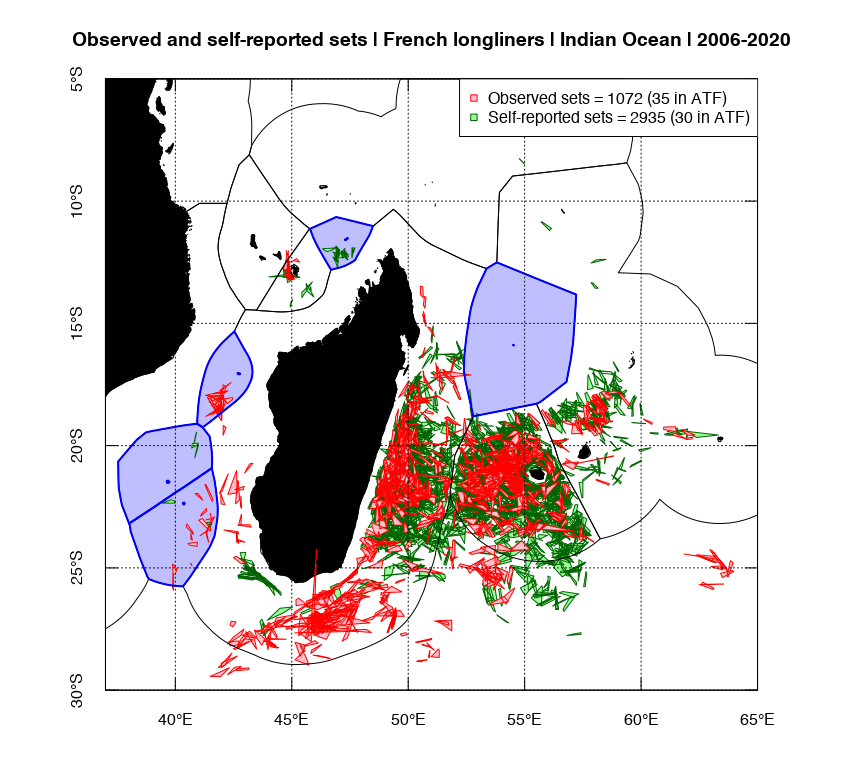
Cette carte présente la totalité des filages observés (en rouge) et auto-échantillonnés (en vert) de 2006 à 2020 dans le sud-ouest océan Indien réalisés par les navires réunionnais (carte réalisée par l’IRD, Ob7) dans le cadre du programme de collecte de données de pêche.
Salomé KHATIB